

Mireia Tintoré (EDO-UIC) participates in a publication on leadership in schools
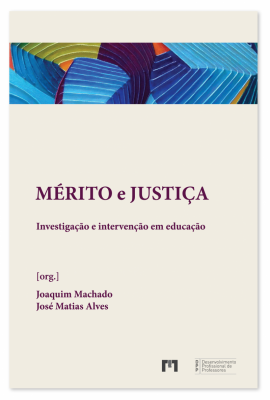
The book is entitled "Merit and Justice. Investigation and Intervention in Education" and written by Joaquim Machado and José Matias Alves.
The Portuguese professors Joaquim Machado and José Matias Alves have published the book "Mérito y justiça. Investigação e intervenção a Educaçao", in which Mireia Tintoré, from the EDO-UIC group, participated with the chapter 'Leadership in schools. Latest trends in research on educational leadership'.
The book cited is a publication about educational leadership, in general, and leadership for social justice, in particular. This work leads the reader to the specificity of the field of study of Educational Leadership. At the theoretical level, they try to explain the situation of this field of study today. In addition, with regard to the epistemological plan, the work tries to sum up some concepts related to research and its paradigms.
Regarding the contribution of the professor of the EDO-UIC group, the chapter tries to show how research has evolved around educational leadership since the 1980s and analyse the development of three main lines of research at the international level. First, the different models of educational leadership are addressed, from the instructional leadership of the 80s to the leadership for learning of today. Within this line of research, new approaches to management are analysed, such as distributed leadership, leadership for social justice, or leadership and direction for missions.
Secondly, it concerns the professionalization of management, and matters related to the access and training of school executives. It is studied and verified the need to train managers and identify the best ways to do so, comparing practices and methodologies at the international level. Finally, the successful management practices are analysed. This line highlights the numerous international studies that identify the best leadership practices and their contribution to creating professional learning communities.
It concludes showing the enormous vitality of educational leadership within the more general framework of studies on leadership in different disciplines.
Share on social media: