


Protestant on Twitter: citizenship and empowerment from public education
José Luis Muñoz, with other authors, reflects on the social mobility of Twitter on public education.
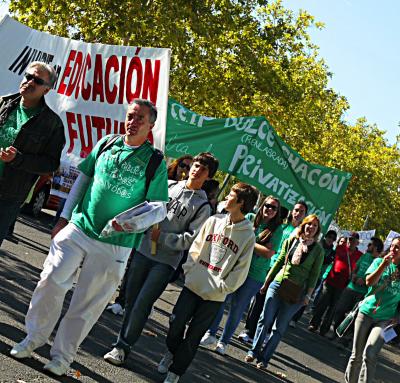
The trend of using social networks as a weapon of protest has been a protagonist in the recent protests at a global level against the privatization of public services. From the economic austerity policies in Greece, through the Arab Spring, the student protest movement in Chile or the Spanish demonstrations calling for a real democracy and an education for all (Marea Verde Movement), social networks have become as a means of network society.
It is therefore essential to study how social networks are changing political communication, mobilization and organization of collective protests. In this sense, the objective of the article Protesting on Twitter: citizenship and empowerment from public education is to analyze the new citizen empowerment forms from the collective protests for the defense of public education in Spain.
From the determination of the main studies, a narrative analysis was done in three different Twitter accounts: @YoEPublica, @SoyPublica and @EsPublica. Its selection is based on the criteria of relevance in the network (accounts with more than 10,000 followers) and activity (a minimum of 30,000 published tweets).
As has been analyzed, in this multiple social network, citizenship has mobilized and empowered, actively participating in the debate and defense of education as a fundamental social right through its democratization and universalization.
The methodology used suggests the emergence of four categories of analysis that agglutinate and characterize the demands of social movements through social networks. Rejecting "privatization of education" and "standardized tests", on the one hand, and demanding the "defense of the public school" and the achievement of an "educational pact" of political forces and the educational community, on the other.
Finally, this type of research evidences the paper that social networks are playing in their ability to alter the traditional role of public authorities. It is important to take into account that collective protest actions use the Internet as a channel of information and communication to join their demands.
To read the full article of Comunicar 53 magazine, click here.
Share on social media: