The new book by Joaquín Gairín Sallán and José Luís Muñoz Moreno addresses one of the most pressing questions facing education today: what enables an organization to progress, learn, and sustain meaningful long-term projects? By bringing together leadership, innovation, well-being, artificial intelligence, and institutional development, the book offers a fresh perspective on educational leadership and management.
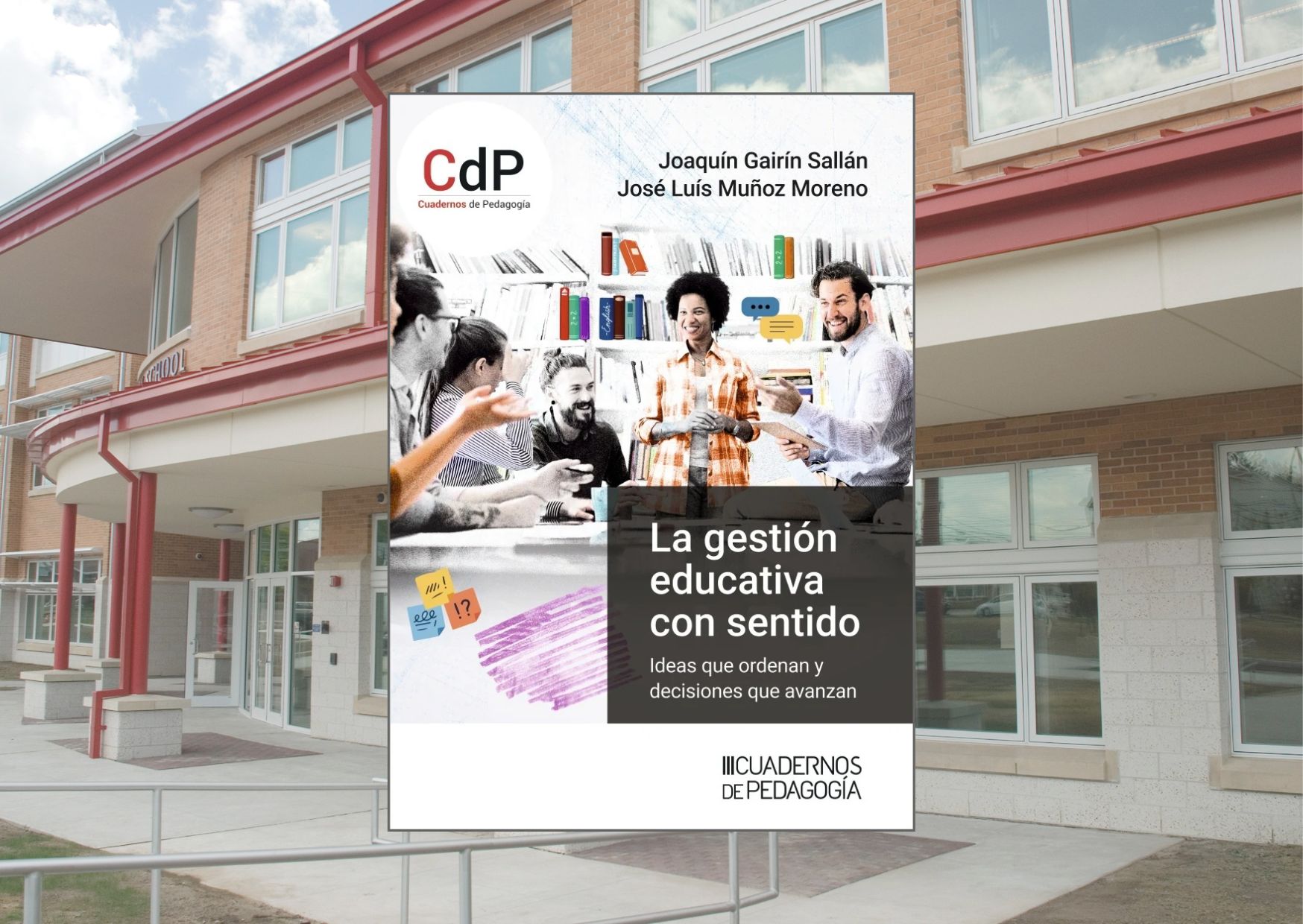
Why are some educational institutions able to build strong and sustainable projects while others struggle to turn the efforts of their professionals into lasting achievements? This is the question that inspires La gestión educativa con sentido. Ideas que ordenan y decisiones que avanzan, the new book by Joaquín Gairín Sallán and José Luís Muñoz Moreno, published by Aranzadi LA LEY.
The book examines one of the major challenges of our time: how to lead educational organizations in environments characterized by constant change, growing demands, and increasingly complex realities. Rather than focusing exclusively on procedures, resources, or structures, the authors highlight the factors that enable institutions to develop coherent and sustainable projects with a long-term vision.
Drawing on an extensive record of research and collaboration with educational institutions, the book explores issues closely connected to the realities of schools, secondary education centers, universities, and training organizations. Leadership, institutional trust, organizational culture, innovation, equity, sustainability, staff well-being, networking, and artificial intelligence are presented as interconnected elements that shape an organization’s ability to evolve and achieve better outcomes.
One of the book’s greatest strengths is its ability to combine intellectual reflection with practical relevance. Through analysis, examples, and actionable proposals, the authors provide tools for understanding complex situations, setting priorities, and strengthening the capacity of educational institutions to respond effectively to emerging challenges.
Beyond its relevance for those holding leadership positions, the book also raises broader questions about organizations in general: How is trust built? What drives collective commitment? Why do some projects endure while others fade away? What conditions support long-lasting processes of improvement and development?
With this publication, Joaquín Gairín Sallán and José Luís Muñoz Moreno contribute to a renewed understanding of educational leadership and management, a field that is essential for explaining how organizations learn, evolve, and transform themselves. The result of a long academic and professional trajectory, the book engages with some of the most significant debates in international education and offers valuable analytical and practical insights for researchers, institutional leaders, and professionals across diverse contexts and countries.
Rather than providing ready-made answers, La gestión educativa con sentido. Ideas que ordenan y decisiones que avanzan proposes a way of understanding educational management that helps distinguish what truly matters from what is merely urgent, connects everyday decisions to institutional goals, and supports the development of organizations capable of maintaining direction without sacrificing innovation or continuous improvement.
Further information and book purchase here.