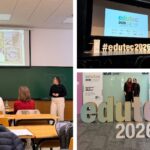
Once again, CRiEDO took part in the 20th Ibero-American Education Meeting (EIDE 2026) as an associated and collaborating institution. The event was held in La Serena, Chile, from 16 to 20 November. Several CRiEDO members served on the Scientific Committee and presented a range of contributions.
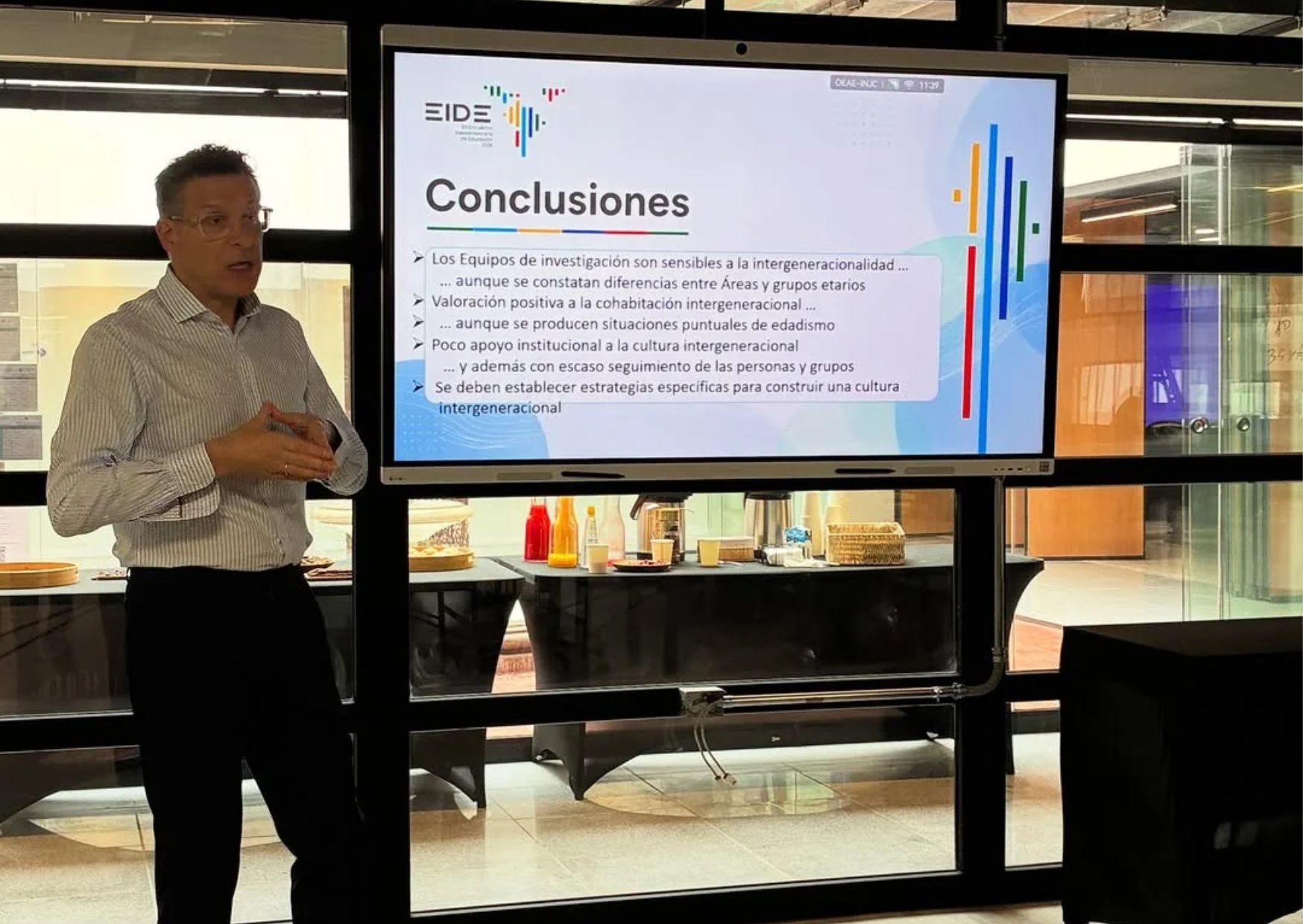
Professors Diego Castro Ceacero and David Rodríguez Gómez presented the papers “Analysis of Performance and Intergenerational Relationships in University Research Teams and Centers According to Their Field of Knowledge” and “Dynamics of University Research Teams in Spain: An Intergenerational Perspective”. Their contributions highlighted:
- High scientific performance despite low organizational formalization, showing that university research teams achieve strong bibliometric productivity (87.3%), driven by the expertise of their members and a commitment to continuous learning. However, weaknesses remain in formal strategic planning, regular monitoring, and technology transfer to external sectors.
- The need for management and leadership policies tailored to specific fields of knowledge, moving beyond homogeneous approaches and adapting institutional support to disciplinary realities, from large research groups structured around experimental laboratories to the more individualistic and fragmented dynamics common in the humanities and social sciences.
- The importance of fostering inclusive institutional environments that strengthen intergenerational collaboration, building on the positive disposition toward working across age groups to promote mentoring programs and shared knowledge transfer, particularly in areas with more hierarchical structures and a greater risk of losing intellectual capital.
Professor Joaquín Gairín presented the paper “Open Knowledge, Artificial Intelligence, and Its Educational Implications”, which offers a perspective on current educational challenges. In line with the Educational Policies strand of FIET 2026, the presentation emphasized the need for:
- Specific regulations that clearly define public responsibility regarding the impact of AI on education, including the provision of resources, organizational changes, training programs for teachers, students, and the wider public, competency frameworks, and new professional profiles.
- An operational framework for education systems and institutions that ensures the contextualization and personalization of educational interventions.
- Mechanisms to guarantee the quality of emerging educational policies and practices through independent public agencies (non-governmental) and a harmonized regional and global system of registration and oversight.
He also participated in the international panel discussion “Challenges and Transformations in Higher Education in Ibero-America”, where he addressed issues related to inclusion and equity in universities, emphasizing:
- The importance of maintaining and expanding inclusive discourses and practices, ensuring they are not overshadowed by the growing attention given to AI and educational innovation.
- The need to address emerging and evolving challenges, such as support for migrants, mental health concerns, and other pressing issues, while balancing initiatives focused on differences with those that reinforce shared values and common goals.
- The importance of combining attention to subjects (individuals, groups, and institutions) with consideration of educational objects (curricula, research, community engagement, etc.), while also examining both the possibilities and limitations of inclusive education.
More information is available here.