


Inclusive education in Latin America
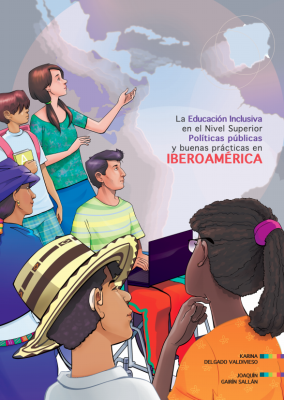
Available the book "Inclusive education at the higher level. Public policies and good practices in Latin America".
Ibero-American countries through their states have the responsibility to enforce the right to education through legal instruments that seek equity at all educational levels. In the last decades, declarations, letters and conventions have appeared that regulate the commitments and legislative measures that each country must carry out so that education becomes a service for all.
We understand inclusive education as the work to be carried out, through different actions, in order to successfully meet the learning needs of each of the students. These actions will be carried out in a warm environment for teachers and students, where the latter must be able to have their presence, participation and academic success guaranteed.
Karina Delgado Valdivieso (PhD from the UAB) and Joaquín Gairín Sallán, present a material related to equity in Higher Education, structured in two main sections:
The first part shows the foundations of inclusive education at the higher level, described in unit one, through its reasons, expressed in treaties, conventions, movements and trajectories on a world scale and in countries of the region. The arguments developed from the movements towards an education for all have made it possible to generate spaces to analyze care according to the needs presented by different groups; Unit 2 shows the approaches towards the concept of inclusive education; Unit 3 describes the panorama of inclusive education policies in each of the Ibero-American countries related to regulations, they have been grouped according to three important dimensions to be completed as part of the management: presence, participation and academic success; and unit 4 shows their realities and perspectives.
The second part, on the operation of inclusive education, shows unit 5, describes the methodological construction, reflected through the management of different intervention models applied in higher education institutions. And unit 6 develops the proposal and trajectory of the "Social model of inclusive education", described through three important variables such as educational policies, student conditions and attitudes towards diversity, thus allowing to know an index of effectiveness of the model . The aforementioned model has been applied as a pilot experience in two major universities in the Ecuadorian territory, reflecting an index of inclusive education management, as well as a reliability percentage of the model.
Book available here.
Share on social media: